

How to Hire a React Native Developer: Skills, Questions and Process
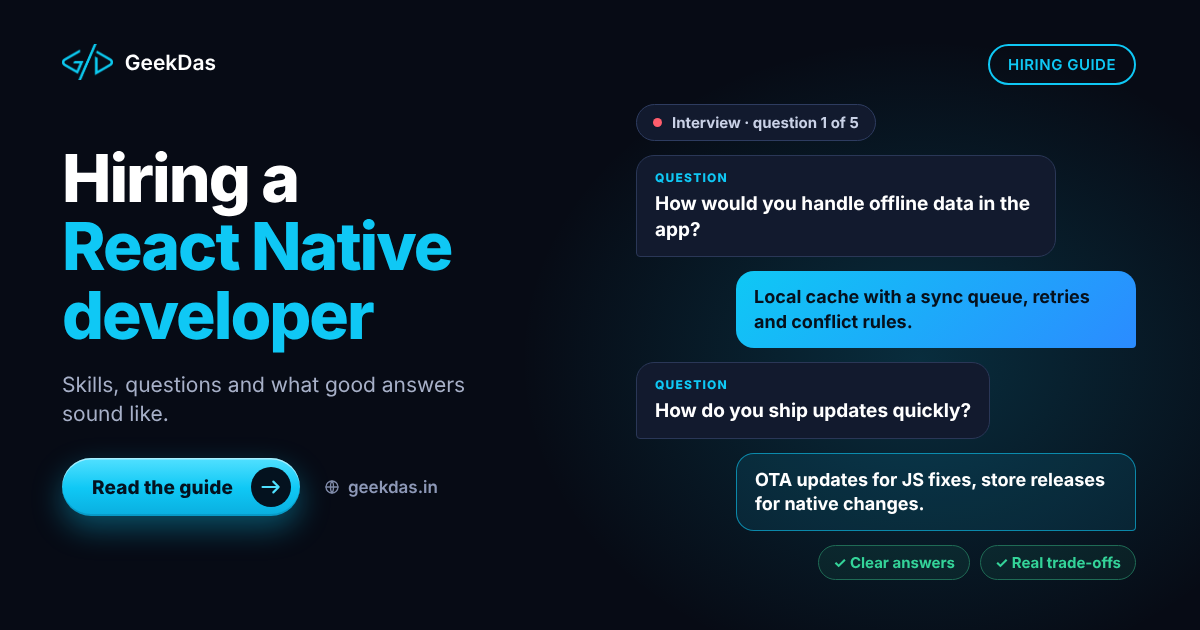
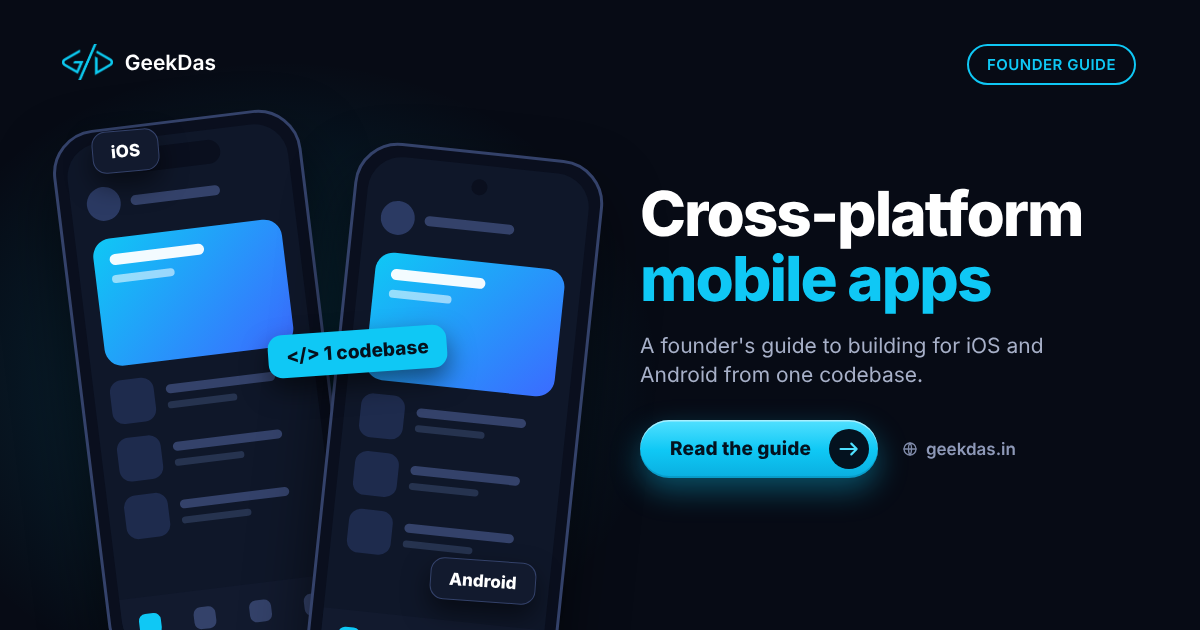
React Native lets one team build iOS and Android apps from a shared codebase, which is why it is so popular with startups. It also means the quality of a React Native app depends heavily on the developer, because the framework hides some platform details until they suddenly matter: a native module that needs configuring, a build that fails on one platform, a store rejection.
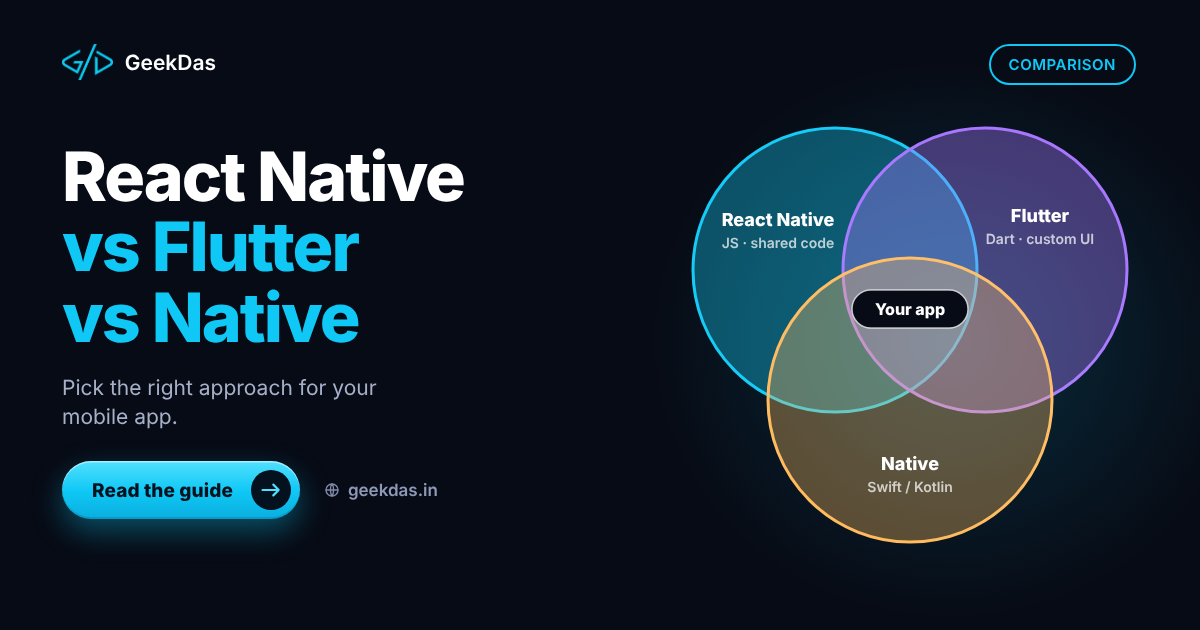
This guide helps you hire a React Native developer with confidence. It covers when React Native is the right choice, the skills to look for, practical interview questions, how to vet past work, engagement models and common mistakes. If you are still deciding between approaches, start with the cross-platform mobile app guide and React Native vs Flutter vs native. For general hiring models, the full stack developer hiring guide is a useful companion.
When React Native fits
React Native is a strong choice when:
You want iOS and Android at the same time with one codebase.
Your team already knows JavaScript or TypeScript and React.
The app is business or consumer-oriented: accounts, feeds, bookings, payments, messaging, content.
You want to share logic with a web product.
It is less suitable for games, heavy real-time graphics or apps built around cutting-edge platform-specific features, where native development may be better.
What a strong React Native developer knows
Core skills
Modern React, hooks and TypeScript
Navigation, state management and forms
Managing data from APIs, caching and offline behaviour
Platform differences between iOS and Android
Performance: list rendering, memoisation, avoiding unnecessary re-renders
Debugging on real devices
Native-layer awareness
Using native modules and knowing when a library needs native code
Handling permissions: camera, location, notifications
Build systems and signing for both platforms
Knowing how Expo and the bare React Native workflow differ, and which suits the project
Beyond the app
Backend and API design, since the app depends on it
Authentication and secure storage of tokens
Push notification setup
App Store and Google Play requirements and release management
Crash reporting and analytics
A developer who covers the backend and the store launch simplifies your project considerably. This is the approach described for hiring a React Native developer on GeekDas.
Interview questions that reveal real skill
1. "Walk me through an app you published."
Look for specifics: what the app does, which libraries they used, what was hard. Ask for the store link and download it.
2. "A list screen is janky. What do you check?"
Good answers mention list virtualisation, item keys, memoisation, image sizing and measuring rather than guessing.
3. "How do you handle a feature that needs native code?"
A strong developer explains how to find an existing library, evaluate its maintenance, and when to write a custom native module. A warning sign is "React Native can do everything".
4. "How do you manage releases and updates?"
Listen for build automation, staged rollouts, version management and awareness of store review time. Ask whether they use over-the-air updates and understand their limits under store rules.
5. "How do you store sensitive data and handle auth tokens?"
Expect secure storage, not plain local storage, token refresh handling and care about logging.
6. "What would make you recommend native instead?"
Honest trade-off thinking is a positive sign.
How to vet previous work
Install the apps. Check start-up time, scrolling, offline behaviour and crashes.
Check store listings. Update history shows whether the app is maintained.
Ask which parts they personally built, since teams often share credit.
Review code if possible, or ask an independent developer to do so.
Talk to a previous client where the developer can provide one.
Be aware that some developers will have strong web or backend experience and fewer published apps. That is not disqualifying, but you should ask for evidence of mobile-specific work, and a short paid pilot task is a fair way to test it.
Engagement models
Model | Best for | Watch out for |
|---|---|---|
Fixed-scope project | A defined app or MVP | Scope change process |
Time and materials | Evolving products | Budget caps and reporting |
Monthly retainer | Maintenance and steady improvements | Define included hours |
Part-time augmentation | Adding capacity to a team | Overlap hours and code conventions |
For a first app, a fixed-scope MVP with clear milestones works well; see the guidance on MVP development for startups.
Cost factors
Rates and project prices vary with seniority, location, scope and engagement model, so a single figure would mislead. What changes the cost most:
Number of screens and flows
Backend and admin requirements
Payments, subscriptions and real-time features
Offline support and device integrations
Design effort
Number of third-party integrations
Post-launch support and maintenance
Compare quotes on what they include: backend, testing, store submission, analytics and handover. A lower price that excludes these is not lower.
Red flags
No published or verifiable mobile work and no willingness to do a paid pilot
Cannot explain trade-offs between React Native, Flutter and native
No mention of testing on real devices
Store accounts registered in the developer's name instead of yours
No plan for app updates and operating system changes
Promises of fixed delivery dates without scoping
Reluctance to give you repository access
Practical steps to hire well
Write a one-page brief: users, core flows, platforms, integrations, timeline.
Shortlist developers based on verifiable work.
Run a short call, then a small paid task.
Agree scope, milestones, payment and ownership in writing.
Set up your own repository, Apple Developer and Google Play accounts and invite the developer.
Require regular test builds, so you see progress on your phone.
Plan launch and maintenance. App Store launch and app maintenance explains what to prepare.
Working across time zones
Developers in India (IST, UTC+5:30) overlap well with the Middle East, Asia-Pacific and Europe, and with US time zones through shared early-morning or evening hours, supported by written updates. For the practical setup, see software development outsourcing to India.
Why GeekDas
GeekDas is a one-developer practice based in Jaipur, Rajasthan, with more than five years of experience in React, TypeScript and Node.js, building mobile apps with React Native together with the backend and the store launch. If you want one person who owns the interface, API and release, that is the model. Please note that the service page currently lists no public app case studies, so I would suggest a short paid pilot or a scoped first milestone as a way to judge fit.
Conclusion
Hiring a React Native developer comes down to evidence: apps you can install, clear reasoning about performance and native code, honest trade-offs and good communication. Verify with a paid pilot, keep ownership of repositories and store accounts, and plan the launch and maintenance from the start.
If you want to discuss an app, send me a short brief and I will reply with availability and a suggested first milestone.
Was this article helpful?
Comments
Leave a comment
Loading comments...