

Jewellery E-commerce Website Development: Features, Trust and Process
Jewellery is one of the harder things to sell online. It is expensive, personal and often bought for occasions where a mistake is costly. Customers cannot touch it, try it on or judge the sparkle in person, so the website has to do the work of a showroom assistant: show the product honestly, answer practical questions and build enough trust that a large purchase feels safe.
This guide covers what a jewellery e-commerce website needs, from catalogue structure and imagery to pricing logic, trust signals, payments, search visibility and operations. It is for jewellers, brands and manufacturers, including the many in Jaipur and Rajasthan, a region long associated with gemstones, jewellery craft and exports, who want to sell directly online. It builds on the general e-commerce website development guide with what is specific to jewellery.
What makes jewellery e-commerce different
Factor | Why it matters for jewellery |
|---|---|
High order value | Customers need more reassurance and often want to talk to someone first |
Detail-heavy products | Metal, purity, stone, weight, certification and dimensions all matter |
Visual purchase | Photography and zoom drive confidence |
Variants and customisation | Sizes, metals, engravings and made-to-order pieces |
Price tied to materials | Prices may depend on metal rates and making charges |
Gifting and occasions | Packaging, delivery dates and gift messages matter |
Fraud and returns risk | Higher chargeback and return exposure |
Strong offline relationships | Customers may expect showroom or phone contact too |
Catalogue and product data
Good structure helps both customers and search engines.
Core product attributes
Category and sub-category (rings, necklaces, earrings, bangles and so on)
Metal and purity, for example gold karat or silver grade
Stones: type, cut, carat or weight, and certification where applicable
Weight and dimensions
Collection, occasion or style tags
Size options, with a size guide
Stock status and expected delivery
Variants
Support combinations such as metal colour, size and stone, each with its own images, stock and price where needed. Avoid creating a separate product for every variant; it clutters search results.
Certification and hallmarking
Where products carry hallmarks or stone certificates, show the details and, where appropriate, copies. Make claims only that you can document. Compliance requirements depend on your jurisdiction, so confirm them locally.
Product pages that sell
Photography and media
Multiple high-resolution images from different angles, including scale reference
Smooth zoom on desktop and mobile
Short video for movement and sparkle
Consistent lighting and backgrounds across the catalogue
Heavy imagery slows pages, so serve correctly sized, compressed images in modern formats. That balance is central to a good jewellery site. See the website redesign and Core Web Vitals guide for how to measure it.
Clear information
Price clearly displayed, with what it includes
A concise description followed by a detailed specification table
Delivery estimate and return policy near the buy button
Care instructions
Size guide that opens without leaving the page
Reassurance
Authenticity and certification information
Secure payment indicators
Easy contact options: phone and WhatsApp for questions before purchase
Customers regularly want to ask something first, so a visible WhatsApp or call option can convert hesitant buyers.
Pricing logic
Jewellery pricing is often more complicated than other retail. Decide early how the site will handle:
Fixed prices per product, updated manually or by import
Dynamic pricing from metal rate, weight and making charges
Discounts and coupons with rules that do not conflict with the pricing formula
Taxes such as GST for sales in India, applied correctly on the invoice
Currency for international customers
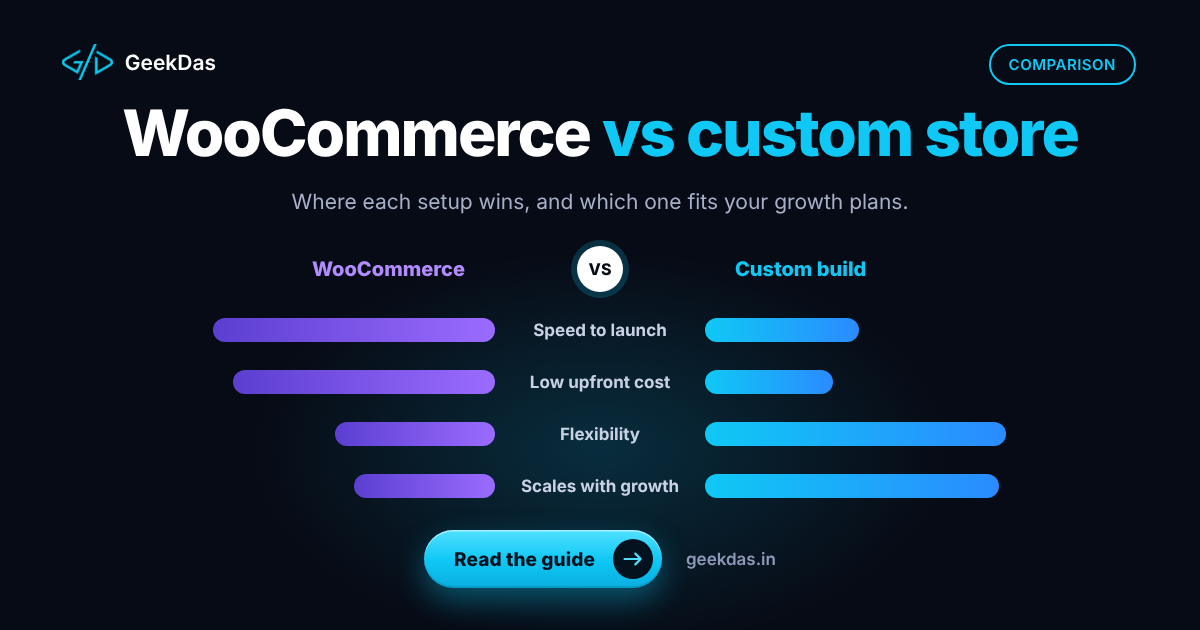
If prices depend on daily metal rates, the system needs an admin interface or feed to update them reliably, and a clear policy for how long a displayed price is valid during checkout. This is the kind of requirement where a custom online store can be a better fit than a plugin stack; see WooCommerce vs a custom e-commerce store.
Trust signals
Trust is the main conversion lever in jewellery.
Real contact details: address, phone, email and business registration information
Policies that are easy to find: shipping, returns, exchange, repair, warranty and privacy
Genuine reviews with photos where customers agree
Transparent making and material information
Secure checkout with recognised payment providers
Showroom or workshop information, where it exists
Packaging and insured delivery details
Avoid invented testimonials, inflated review counts or fake urgency such as "only 1 left" when it is untrue. These damage trust and may breach advertising rules.
Payments, checkout and fulfilment
Payment methods: cards, UPI and net banking for India, with Cash on Delivery for eligible orders where it fits your risk policy, and international card payments for export sales. See the payment gateway integration guide.
High-value order checks: consider additional verification, such as a confirmation call for large orders, to reduce fraud and mistakes.
Insured shipping and tracking, with signature on delivery for expensive items.
Gift options: packaging, a message and a hidden-price invoice.
Returns and exchanges: state conditions clearly; custom or engraved pieces are often not returnable, and that should be stated before purchase.
GST invoices: generated automatically, with correct HSN codes. See the GST invoice guide.
SEO for jewellery stores
Search for jewellery is competitive and visual. Foundations that help:
Category pages with real content, not just product grids: buying guidance, materials explained, care tips
Unique product descriptions, not copied manufacturer text
Product structured data with accurate price, availability and, where genuine, reviews
Image optimisation and descriptive alt text
Clean URL structure by category and collection
Fast mobile performance
Helpful content such as size guides, metal and stone explainers and gifting guides, which attract informational searches
No developer can guarantee rankings. These steps remove technical obstacles and support your content efforts.
Operations and the admin panel
A jewellery store needs a back office tuned to its workflow:
Product import and bulk edit for large catalogues
Inventory by variant and, where relevant, by location
Order management with status updates and invoice generation
Coupon and campaign management
Customer records, enquiries and custom order requests
Reports on top products, conversion and returns
The admin panel is where staff will spend their time, so it deserves as much design attention as the storefront.
Platform choice
Situation | Reasonable choice |
|---|---|
Small catalogue, standard pricing, tight budget | WooCommerce or a hosted platform |
Large catalogue, metal-rate pricing, custom workflows, premium brand experience | Custom store |
Existing admin you like but a slow storefront | Headless approach |
GeekDas has built storefronts for jewellery brands, including a full stack store with Cash on Delivery and online payments and a complete admin panel, and a catalogue-heavy jewellery storefront for the brand Kisna. See the jewellery and retail store development page for the work.
Local business context: Jaipur and Rajasthan
Many jewellers and manufacturers in Jaipur and across Rajasthan already sell through showrooms, wholesale relationships and marketplaces. An own-brand online store can add a direct channel, better margins and customer data, but it requires photography, catalogue discipline and fulfilment processes. A practical approach is to launch with a focused collection, learn from real orders and expand. If you are also choosing a local development partner, the guide to web development companies in Jaipur explains how to evaluate one.
Timeline and cost factors
On GeekDas service pages, jewellery and retail stores commonly take 6 to 12 weeks, depending on catalogue size, pricing logic and integrations. Cost drivers include:
Catalogue size and attribute complexity
Pricing rules and metal-rate handling
Custom design and imagery requirements
Payment, shipping and invoicing integrations
Admin and inventory needs
Content and photography
Photography and catalogue preparation often take longer than development, so begin them early.
Common mistakes
Poor or inconsistent photography.
Too little product detail, leaving customers to guess.
Hidden policies on returns and delivery.
Slow pages caused by heavy images.
A complicated checkout for high-value orders.
No way to ask a question before buying.
Weak pricing management, with out-of-date prices.
Ignoring fraud controls for expensive items.
Launching the full catalogue at once without testing demand.
Why GeekDas
GeekDas is a one-developer practice based in Jaipur, Rajasthan, with hands-on experience building jewellery e-commerce storefronts, including catalogue-heavy browsing, Cash on Delivery and online payments, admin panels, WhatsApp chat support and analytics integration. You work directly with the person building it, with a fixed scope and timeline before work begins. For very large multi-store retail programmes, a bigger team may be more appropriate.
Conclusion
A jewellery e-commerce site wins customers by being honest, detailed and reassuring: excellent imagery, precise product data, clear pricing and policies, secure payments and an easy way to talk to a person. Start with a focused collection, get the operations right and grow from real orders.
If you are planning a jewellery store, send me details of your catalogue and pricing approach and I will suggest a platform and a plan.
Was this article helpful?
Comments
Leave a comment
Loading comments...