
What is PNG Gas (Piped Natural Gas): Benefits, Costs & Installation Tips
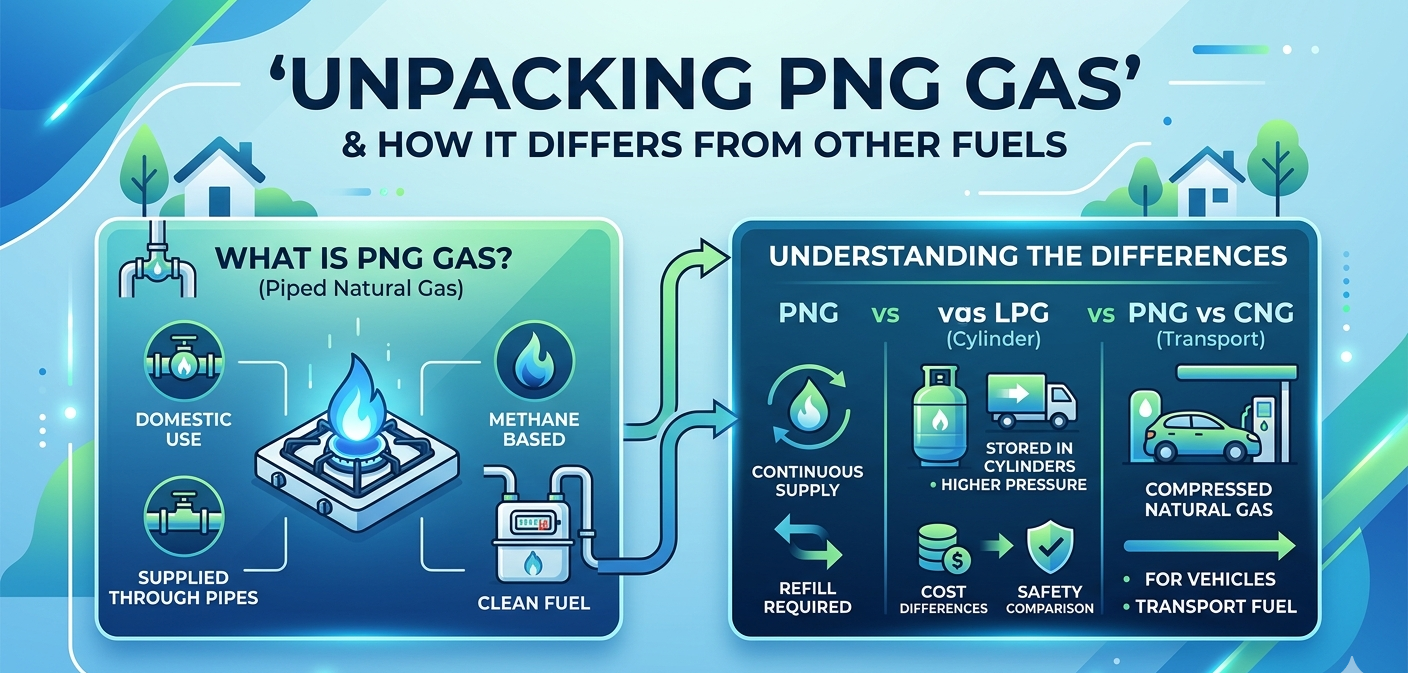
Piped Natural Gas (PNG) is becoming a popular choice for households and businesses looking for a cleaner, safer, and more convenient fuel option. Unlike traditional LPG cylinders, PNG is delivered directly through pipelines, ensuring a continuous supply without the hassle of refilling or storage.
With the growing focus on sustainability and urban infrastructure, PNG is emerging as a reliable energy solution across many cities. This guide covers everything you need to know—from how PNG works to its benefits, installation process, costs, and comparisons with other fuels.
What is PNG Gas?
PNG (Piped Natural Gas) is a natural gas fuel primarily methane supplied through a network of underground pipelines directly to homes and commercial spaces.
Key Characteristics of PNG
Naturally odorless (a smell is added for safety detection)
Lighter than air, so it disperses quickly
Continuous supply through pipelines
No need for cylinder storage
How PNG Gas Works
PNG is transported from natural gas processing plants through high-pressure pipelines and distributed to homes at safe pressure levels.
Components of a PNG System
1. Main Supply Line
Connects your building to the city gas network.
2. Gas Meter
Tracks gas usage for billing.
3. Internal Pipeline
Carries gas from the meter to appliances like stoves and geysers.
4. Pressure Regulator
Maintains safe gas pressure for usage.
Installation Process of PNG Gas
Installing PNG is handled by authorized gas providers and typically involves the following steps:
Step-by-Step Setup
Step 1: Application
Submit a request to your local gas provider.
Step 2: Site Inspection
Technicians assess feasibility and pipeline routing.
Step 3: Pipeline Installation
Pipelines are laid from the main supply to your home.
Step 4: Meter Installation
A gas meter is installed to measure consumption.
Step 5: Activation
Gas supply begins after safety checks are completed.
Practical Examples of PNG Usage
Example 1: Household Cooking
A family uses PNG for daily cooking without worrying about cylinder refills or sudden shortages.
Example 2: Restaurants
Commercial kitchens rely on PNG for uninterrupted cooking operations, improving efficiency.
Example 3: Water Heating
PNG powered geysers provide consistent hot water at lower costs compared to electric heaters.
Benefits of PNG Gas
1. Convenience
No need to book or store cylinders - gas is always available.
2. Safety
PNG disperses quickly in air, reducing the risk of fire hazards.
3. Cost-Effective
Lower long-term costs compared to LPG.
4. Eco-Friendly
Produces fewer emissions, making it environmentally friendly.
5. Space Saving
No bulky cylinders required in the kitchen.
6. Reliable Supply
Continuous gas flow ensures no interruptions.
Comparison: PNG vs LPG vs Electricity
Feature | PNG | LPG | Electricity |
|---|---|---|---|
Supply Method | Pipeline | Cylinders | Power Grid |
Convenience | High | Medium | High |
Cost | Lower (long-term) | Moderate | Higher (for heating) |
Safety | Safer (disperses fast) | Risk of accumulation | Safe |
Environmental Impact | Low emissions | Moderate emissions | Depends on source |
Storage Needed | No | Yes | No |
Key Takeaway
PNG is ideal for urban areas with pipeline access, while LPG remains useful in regions without infrastructure.
Common Mistakes to Avoid
1. Ignoring Maintenance
Periodic inspection ensures safety and efficiency.
2. Hiring Unauthorized Installers
Always use certified professionals.
3. Poor Ventilation
Ensure proper airflow in the kitchen.
4. Ignoring Gas Leaks
Address even minor leaks immediately.
5. Overloading Connections
Avoid connecting too many appliances without proper planning.
Safety Tips for PNG Users
Basic Safety Measures
Install gas leak detectors
Keep valves accessible
Turn off supply when not in use for long periods
Emergency Actions
Avoid using electrical switches during a leak
Open doors and windows immediately
Contact your gas provider
Cost of PNG Gas
Installation Cost
A one-time fee depending on your city and provider.
Monthly Billing
Based on actual usage recorded by the meter.
Maintenance Cost
Minimal compared to LPG systems.
Future of PNG Gas
With increasing demand for clean energy, PNG infrastructure is expanding rapidly. Government initiatives and urban development are driving wider adoption, making PNG a key part of future energy solutions.
Conclusion
PNG gas is a modern, efficient, and eco-friendly alternative to traditional fuels like LPG. Its convenience, safety, and cost-effectiveness make it an excellent choice for homes and businesses.
If PNG is available in your area, switching to it can be a smart and future-ready decision.
Was this article helpful?